How I Can Help
I provide compassionate, evidence-based solutions to help you navigate life's challenges and build a life aligned with your values.
What To Expect
During our first session we'll:
Get to know one another.
Discuss what brings you to therapy.
Explore your goals.
Create a plan that feels right for you.
There is no pressure to have everything figured out, this is simply the beginning of your journey.
Insurance Accepted
Finding The Right Support Is The First Step
Whether you're feeling overwhelmed, navigating a life transition, or simply looking to better understand yourself, therapy can provide a safe space to grow. My approach combines mindfulness, Acceptance & Commitment Therapy (ACT), self-compassion, and practical life skills to help you move forward with confidence.
Services
-
Slow down. Become more present. Find peace in the present moment.
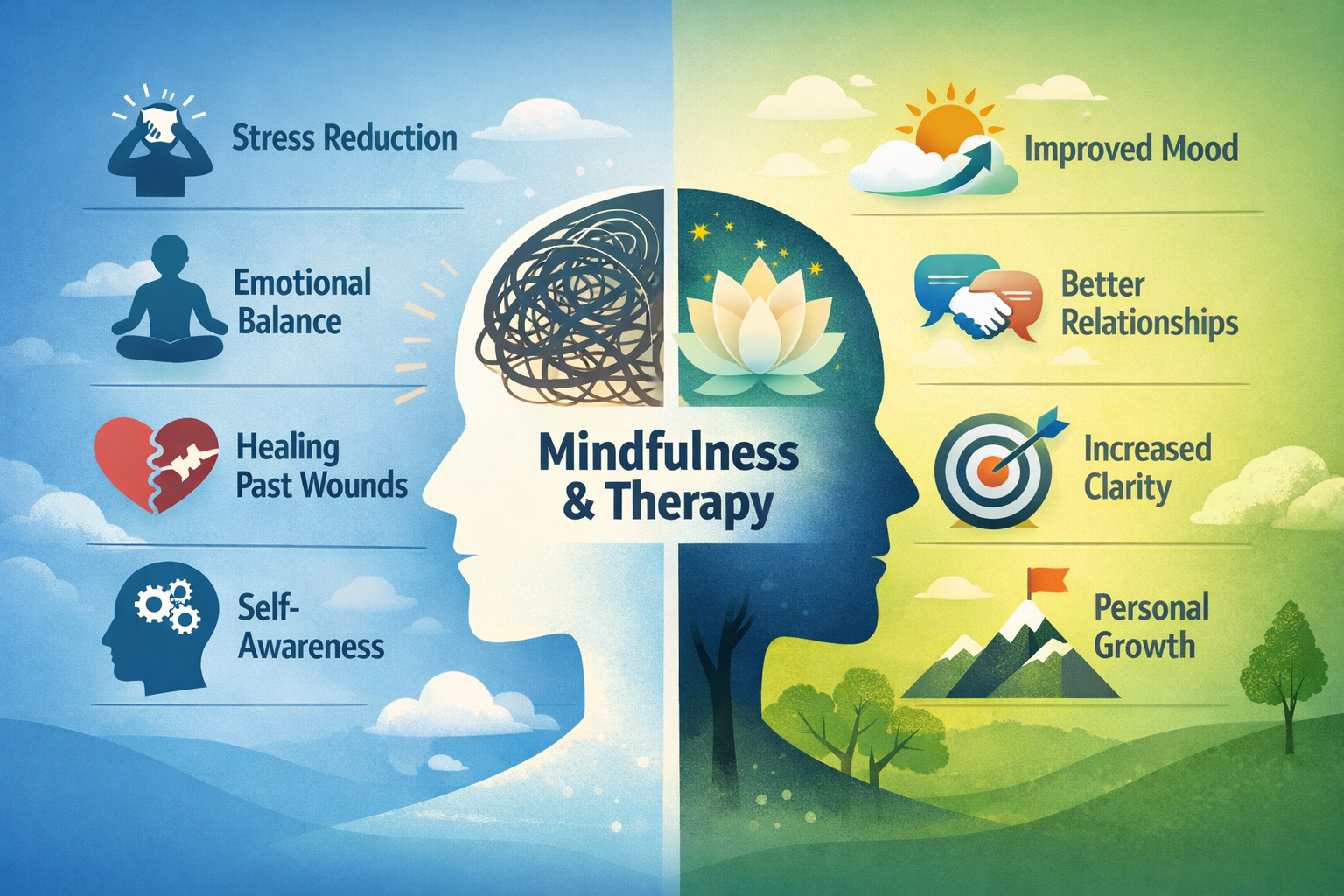
It's easy to spend our days replaying the past or worrying about what's next. Mindfulness helps you reconnect with the present moment so you can respond to life's challenges with greater awareness instead of reacting on autopilot.
Through mindfulness, you'll learn to better understand your thoughts, emotions, and physical sensations while developing healthier ways to respond to stress. Over time, this practice can improve emotional balance, strengthen relationships, and help you feel more grounded in everyday life.
-
Learn to move forward, even when life feels difficult.
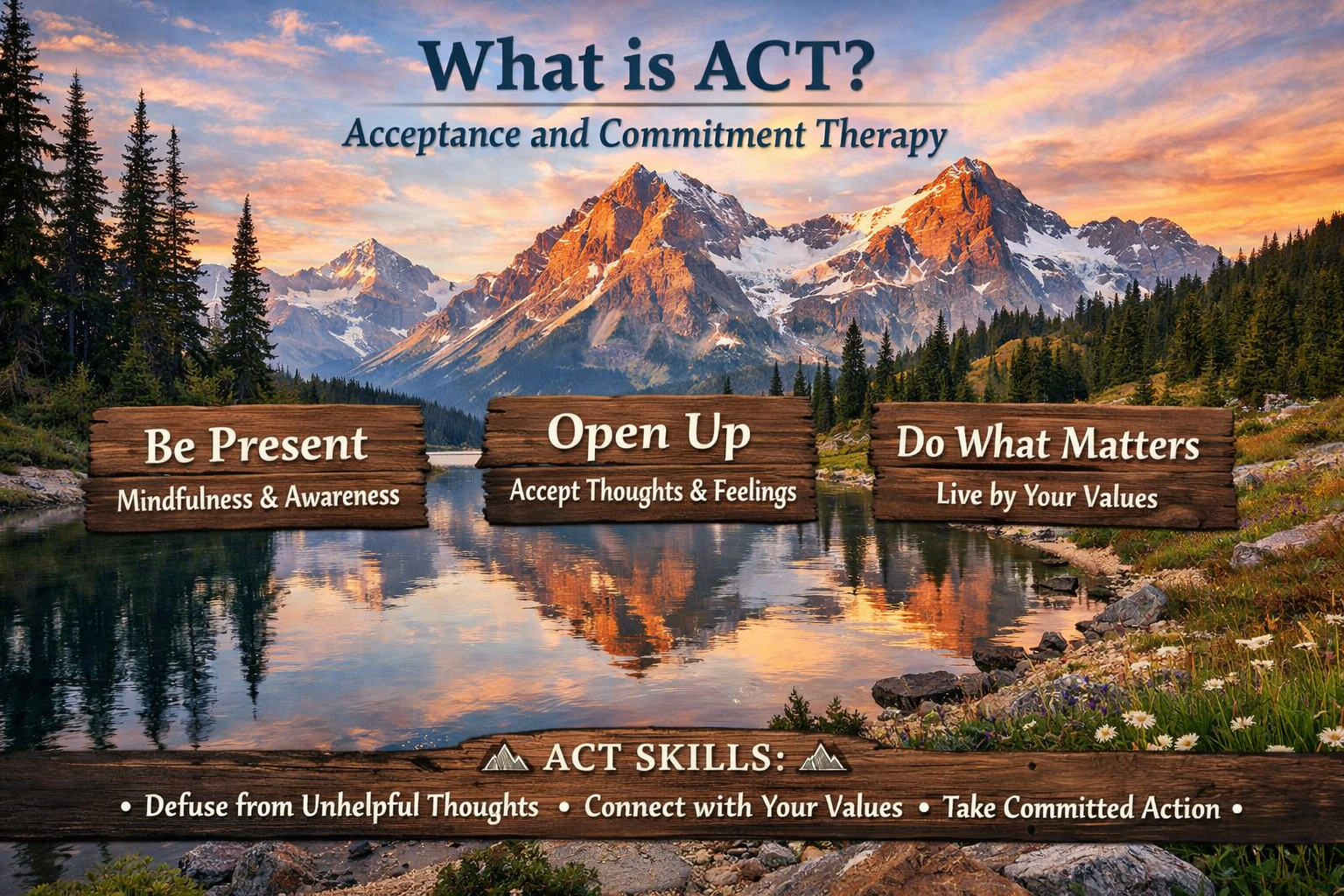
Acceptance & Commitment Therapy (ACT) helps you develop the skills to navigate difficult thoughts and emotions without letting them control your life. Instead of fighting uncomfortable feelings, ACT teaches you how to make room for them while continuing to move toward what matters most.
Together, we'll identify your personal values and build practical strategies that help you respond with intention, increase psychological flexibility, and create a life that feels meaningful and fulfilling.
-
Treat yourself with the same kindness you offer others.
Many of us are our own harshest critics. Self-compassion helps you replace self-judgment with understanding, encouragement, and grace.
Rather than allowing mistakes or setbacks to define you, you'll learn how to respond with kindness while still holding yourself accountable. Developing self-compassion can improve confidence, reduce stress and shame, strengthen resilience, and help you build a healthier relationship with yourself.
You can expect to learn how to:
Navigate setbacks with greater resilience
Reduce self-critical thinking
Build confidence rooted in self-worth
Set healthy boundaries without guilt
Learn from mistakes while treating yourself with compassion
-
Build practical tools for life's most challenging moments.
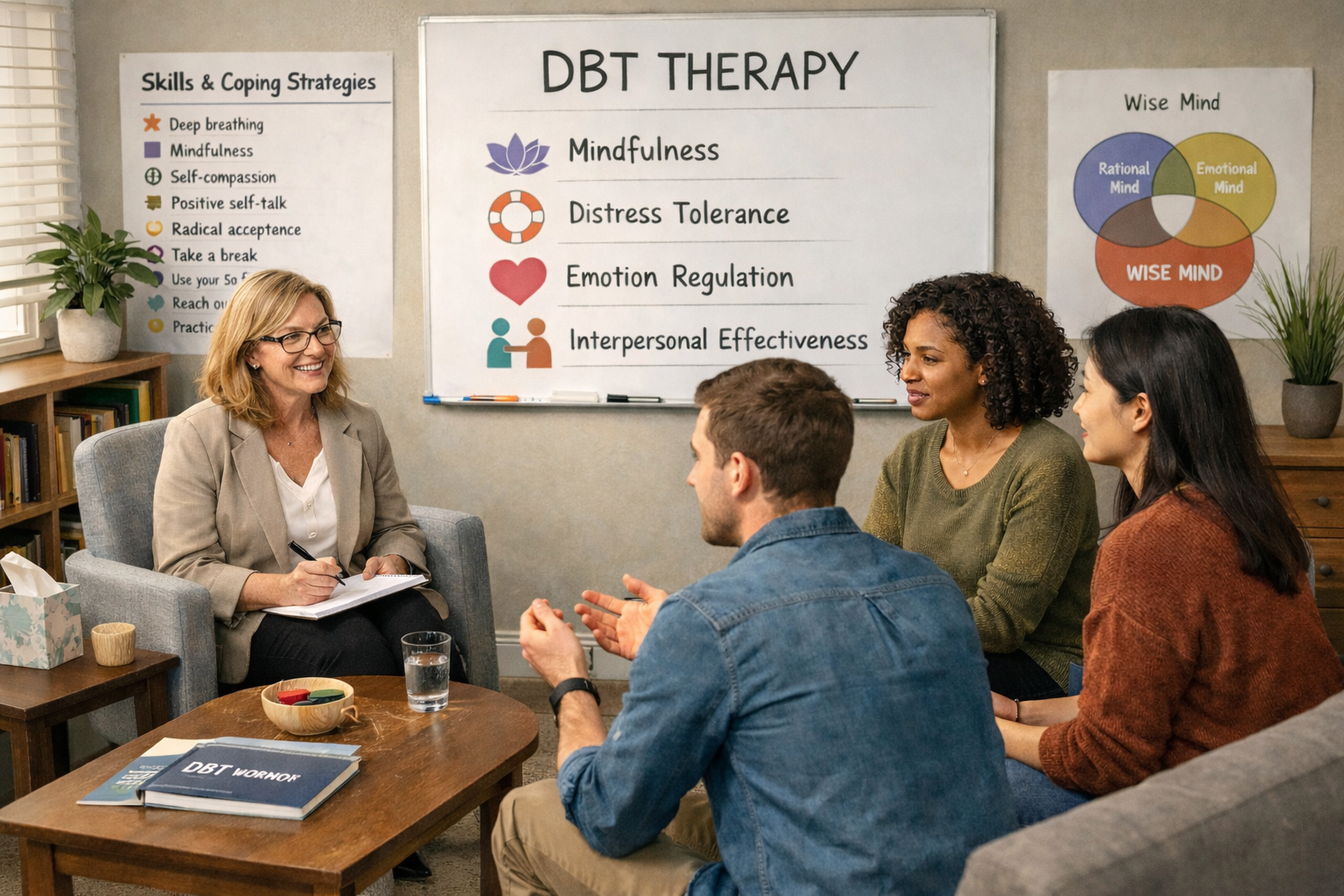
DBT skills provide practical techniques to help you manage overwhelming emotions, improve relationships, and respond more effectively during stressful situations.
Together we'll focus on skills such as:
Mindfulness
Distress tolerance
Emotion regulation
Interpersonal effectiveness
These evidence-based tools can help you stay grounded, improve communication, and feel more confident navigating life's everyday challenges.
BCBS
Ambetter
United Healthcare
MedCost
Aetna